
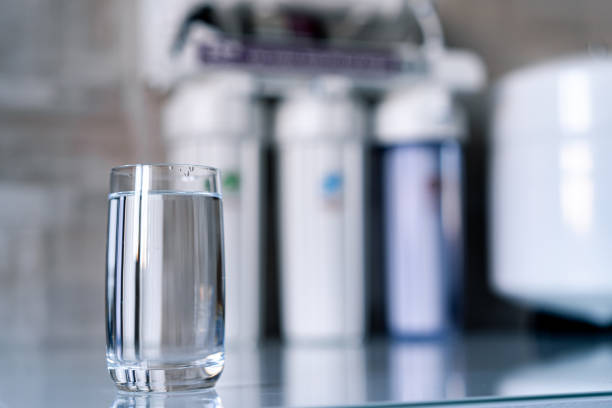
Reverse osmosis (RO) remains one of the most reliable methods for producing high-purity drinking water at home, but the technology’s energy consumption and overall efficiency are often misunderstood. Homeowners looking to balance water quality with utility costs need a clear picture of how an RO filter system draws power, where losses occur, and what design choices can improve performance. This review breaks down the key factors that affect energy usage, compares typical household units with commercial-grade models, and offers practical tips for maximizing efficiency without sacrificing water quality.
How Reverse Osmosis Works: Energy Basics
At its core, an RO system forces water through a semi-permeable membrane using pressure that exceeds the natural osmotic pressure of the source water. The pressure is generated by an electric pump, and the amount of electricity required depends on:
- Feed water pressure: Higher inlet pressure reduces the workload of the pump.
- Membrane permeability: Modern thin-film composite membranes require less pressure than older cellulose acetate types.
- Recovery rate: The proportion of feed water turned into product water; higher recovery means less waste but often higher energy demand.
- Temperature: Warmer water is less viscous, allowing the pump to operate more efficiently.
Typical Energy Consumption Figures
Most residential RO units operate in the range of 0.5 to 1.5 kilowatt-hours (kWh) per 1,000 gallons of purified water. To put that into perspective:
- A 4-stage countertop system that produces 50 gallons per day may use roughly 0.8 kWh per day, translating to about $0.10-$0.15 in electricity costs (based on the U.S. average rate of $0.12/kWh).
- Higher-capacity under-sink models (75-100 gpd) often consume 1.2-1.5 kWh per day, especially when equipped with booster pumps.
- Commercial-grade RO plants, which can treat thousands of gallons per hour, may require 3-5 kWh per 1,000 gallons, but they benefit from energy-recovery devices that dramatically cut net consumption.
Efficiency-Boosting Features
Energy-Recovery Devices (ERDs)
ERDs capture the pressure energy from the brine (waste water) stream and reuse it to pressurize incoming feed water. While more common in industrial settings, compact ERDs are now available for larger residential systems, reducing overall electricity use by up to 30%.
Variable-Speed Pumps
Instead of a single-speed motor that runs at full power regardless of demand, variable-speed pumps adjust their output in real time. This technology aligns energy use with actual water consumption, preventing unnecessary draw when the household demand is low.
Pre-Filtration and Water Softening
Removing hardness and sediment before the RO membrane lowers fouling rates, which in turn reduces the frequency of pump re-pressurization cycles. A well-maintained pre-filter stage can improve overall system efficiency by 10-15%.
Comparing System Types
When selecting an RO unit, consider the trade-off between upfront cost, water output, and energy efficiency. Below is a quick comparison:
| System Type | Typical Output (gpd) | Energy Use (kWh/1,000 g) | Key Efficiency Feature |
|---|---|---|---|
| Countertop 3-stage | 30-40 | 0.9 | Simple design, low cost |
| Under-sink 5-stage | 50-75 | 1.1 | Pre-filter & booster pump |
| Whole-house RO with ERD | 200-300 | 0.6-0.8 | Energy-recovery device |
Practical Tips to Reduce Energy Costs
- Schedule regular maintenance: Replace pre-filters every 6-12 months to keep pressure losses low.
- Optimize water temperature: If possible, draw water from a warm source (e.g., after a hot-water cycle) to lower pump load.
- Utilize a demand-based valve: This valve shuts off the pump when no faucet is open, eliminating idle run time.
- Consider a hybrid system: Pairing RO with a UV sterilizer can allow the membrane to operate at lower pressure while still delivering safe drinking water.
- Monitor usage: Smart meters or plug-in energy monitors reveal real-time consumption and help identify inefficiencies.
Environmental Impact of Waste Water
For every gallon of purified water, an RO system typically discards 2-4 gallons of concentrate. While this ratio is a function of membrane selectivity, it also influences overall energy efficiency because the pump must process more water volume. Strategies to mitigate waste include:
- Re-routing brine to irrigation (if local regulations permit).
- Installing a permeate-pump that recirculates a portion of the waste stream, cutting both water and energy use.
Case Study: Residential Installation in Casa Grande
A recent installation in Casa Grande demonstrated how thoughtful system selection can lower both water and electricity bills. The homeowner opted for a 5-stage under-sink unit equipped with a variable-speed pump and a high-efficiency pre-filter. After six months, the system’s energy consumption dropped to 0.85 kWh per 1,000 gallons, and waste water was reduced by 20% thanks to a permeate-pump retrofit. Detailed findings and recommendations can be explored further Discover expert strategies here.
Future Trends in RO Energy Efficiency
Research continues to push the boundaries of low-energy desalination. Emerging technologies include:
- Graphene-based membranes: Offering higher flux at lower pressure.
- Solar-powered RO units: Integrating photovoltaic panels to offset grid electricity.
- Artificial intelligence controls: Predictive algorithms that fine-tune pump speed based on real-time water quality data.
Adopting these innovations will further reduce the carbon footprint of home water purification. For readers interested in staying ahead of the curve, additional resources are available Explore advanced guides and tips.
Conclusion
Understanding the energy dynamics of reverse osmosis filter systems enables homeowners to make informed choices that balance water purity, cost, and environmental responsibility. By selecting models with variable-speed pumps, incorporating energy-recovery devices where feasible, and maintaining optimal pre-filtration, the average household can keep electricity usage well under 1 kWh per 1,000 gallons while still achieving excellent water quality. Continuous monitoring and adoption of emerging low-energy technologies will ensure that reverse osmosis remains a sustainable solution for clean drinking water well into the future. For a deeper dive into system specifications and localized best practices, visit Find out more about this approach.